
Architecting a Unified Design System for the Federal Reserve.
Role
Lead UX/UI Designer
Duration
4-Month initiative
The Federal Reserve Bank of St. Louis underwent a strategic transition and design system overhaul, moving its digital ecosystem from Adobe XD to a unified, multi-brand Figma library. This initiative involved architecting intuitive experiences for five complex data applications—FRED, ALFRED, FRASER, CASSIDI, and the main site—while streamlining the design-to-development pipeline. By combining high-fidelity prototyping with cross-functional team training, the project eliminated significant design debt and increased development velocity, ensuring a cohesive and future-proof digital identity.
Please note: Due to the sensitive nature of this project and government confidentiality protocols, certain proprietary details and internal documentation have been omitted or obscured to ensure privacy and data protection.
Addressing these issues required a deep immersion into the pain points of internal teams to solve the core problems of systemic inconsistency and workflow friction.

Workflow friction: The transition from legacy tools to a modern platform was essential to increase design velocity and ensure the bank’s digital products remained intuitive and cohesive.
Centralize Branding and Visual Language
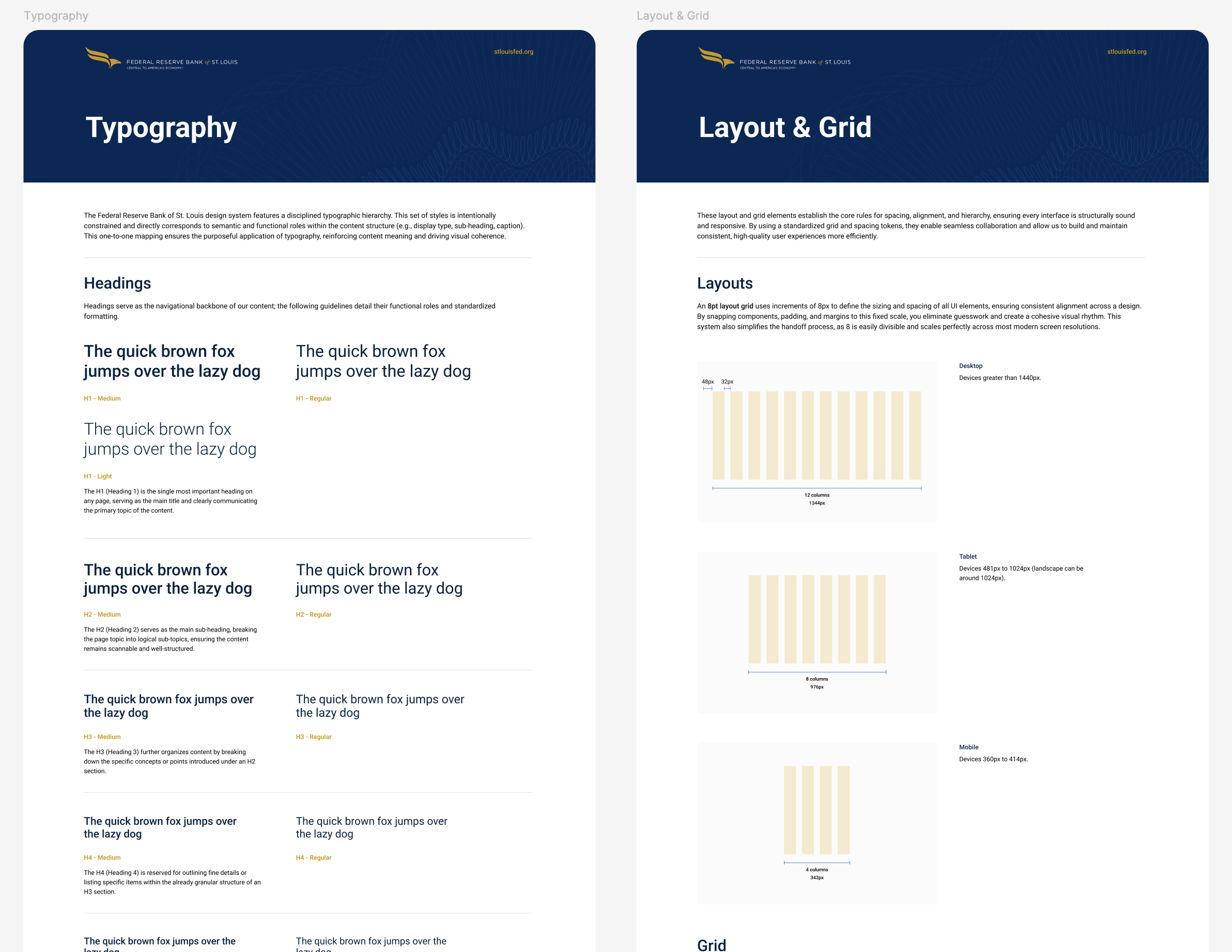
The primary goal was to architect a comprehensive, multi-brand design library that could scale across a diverse digital ecosystem. This required building a system flexible enough to accommodate the high-density data requirements of tools like FRED, while ensuring the core visual identity remained consistent with the primary brand.
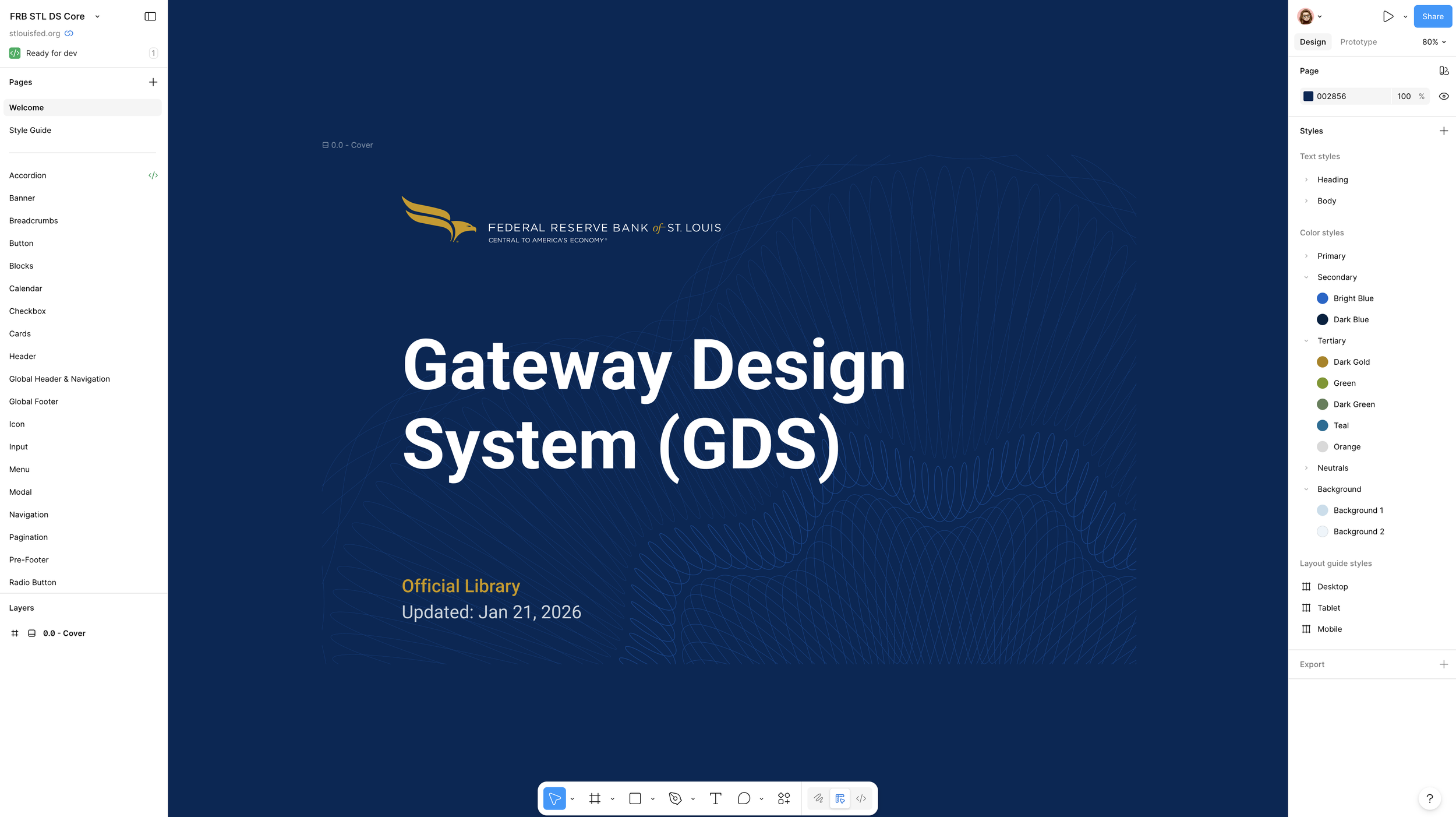
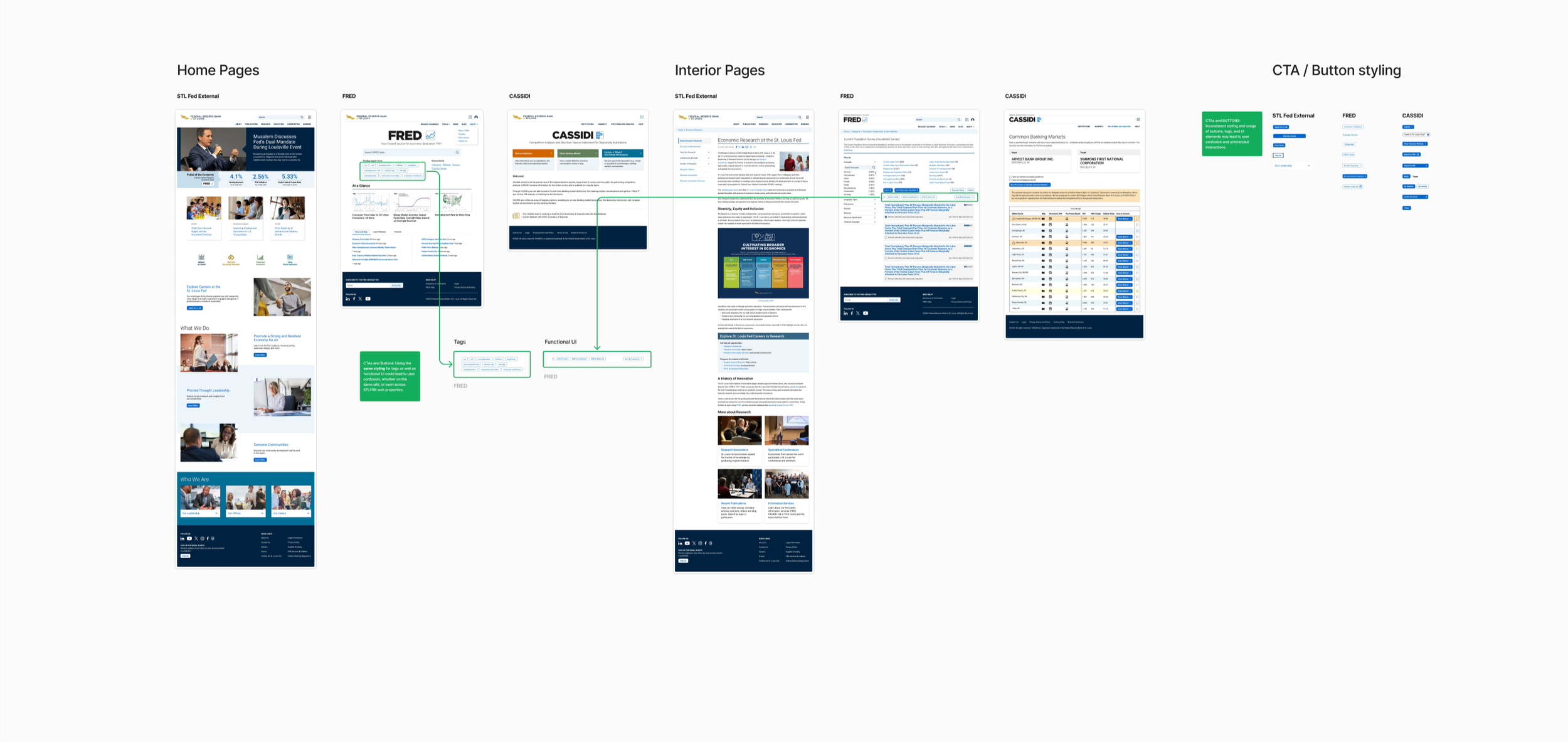
Unified Five Platforms: Successfully merged five distinct app identities into one cohesive, multi-brand library.

The Federal Reserve Bank of St. Louis faced a dual challenge: the looming sunset of Adobe XD and a deeply fragmented digital identity across its most critical platforms.
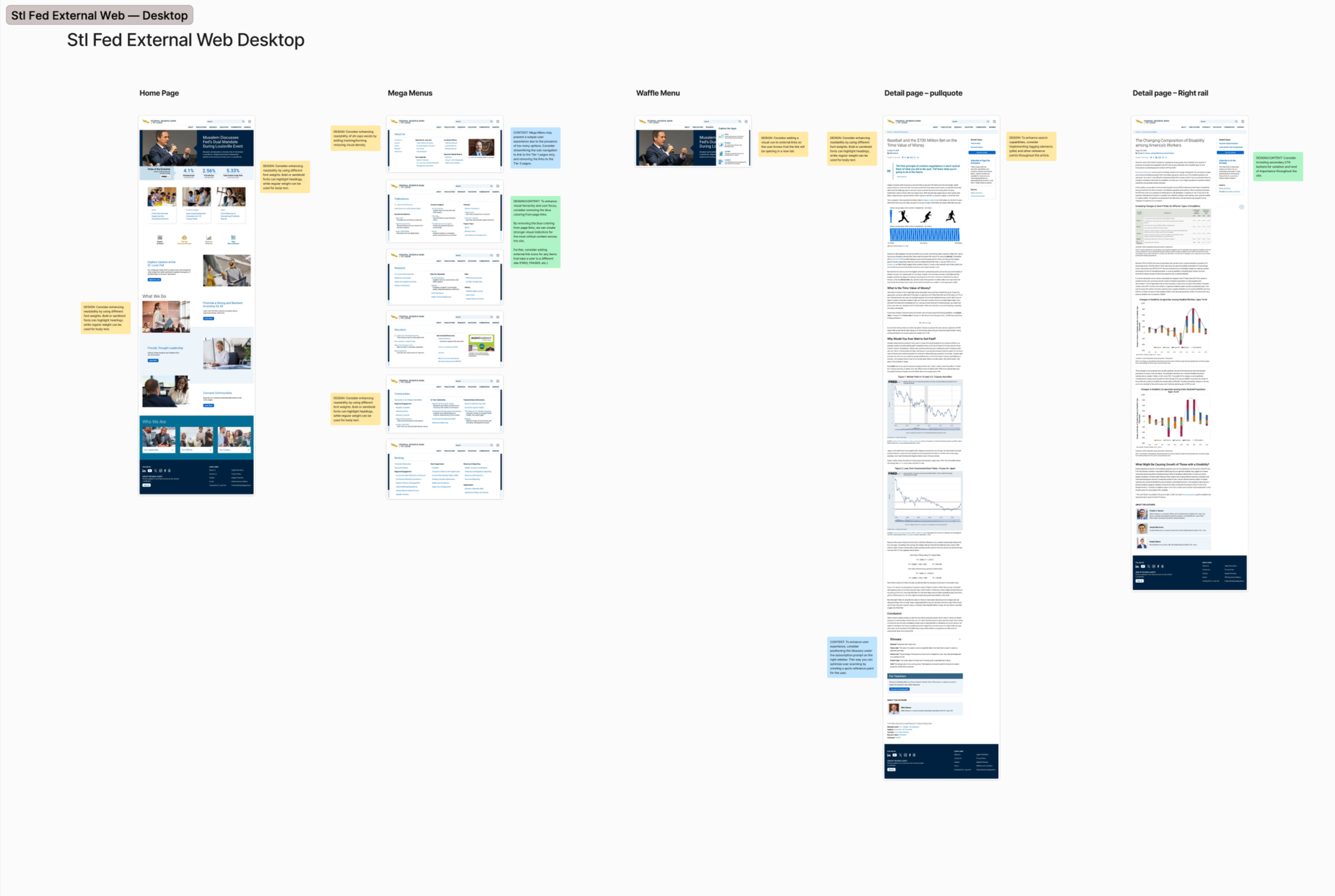
Systemic inconsistency: The main website and specialized data apps (FRED, ALFRED, FRASER, and CASSIDI) lacked a shared UI language, resulting in significant design debt and a disjointed user experience.
Project Goals: Thinking Customer-First
To ensure the design system provided long-term value, the project focused on three primary objectives centered on brand cohesion, operational efficiency, and team readiness:
Accelerate Development Velocity
By shifting the team into a modern, collaborative environment, the project aimed to reduce the friction between design ideation and production deployment. Implementing advanced Figma features—such as auto-layout and component properties—enabled faster iteration and gave developers the clarity needed to ship a pixel-perfect UI.
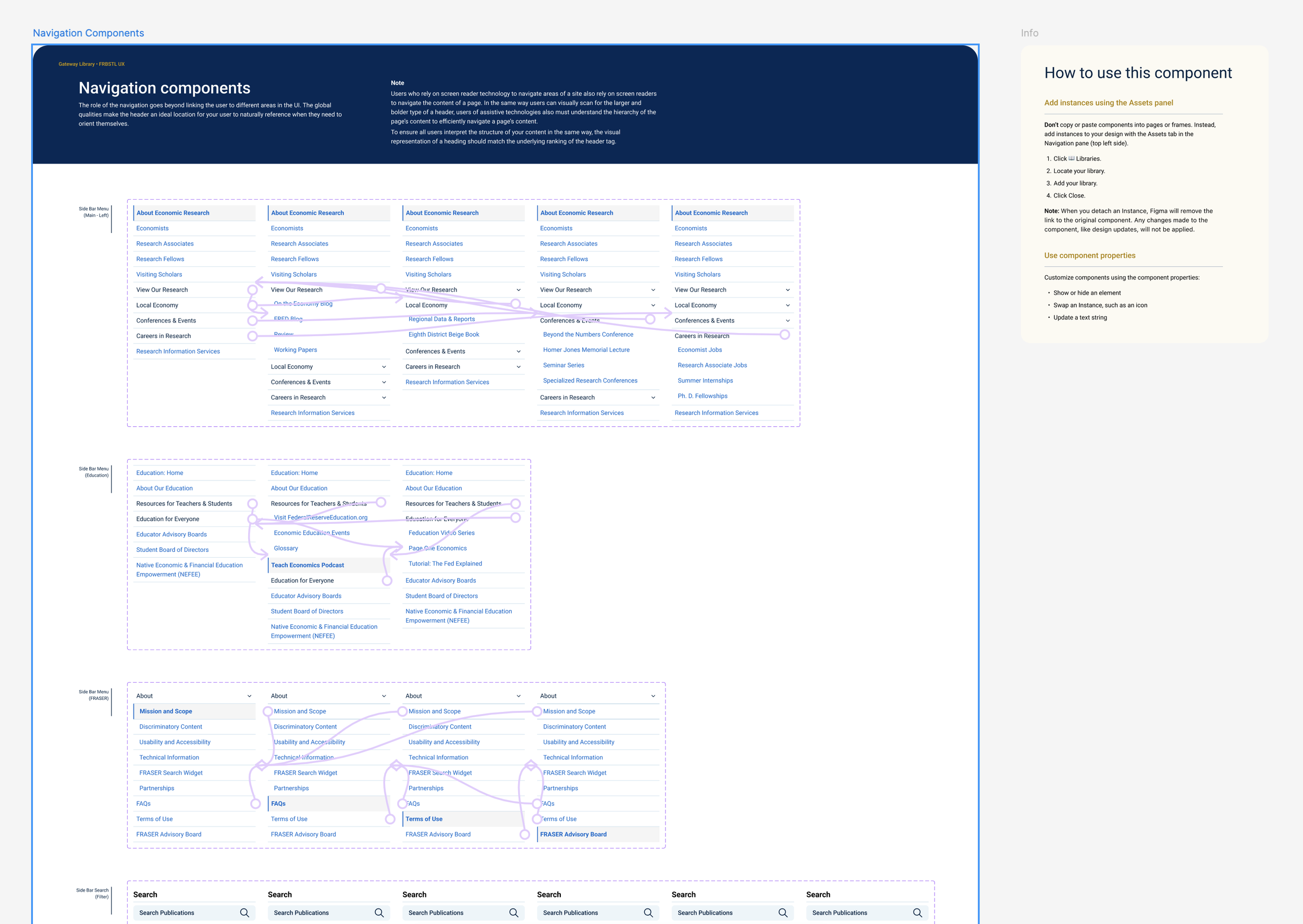
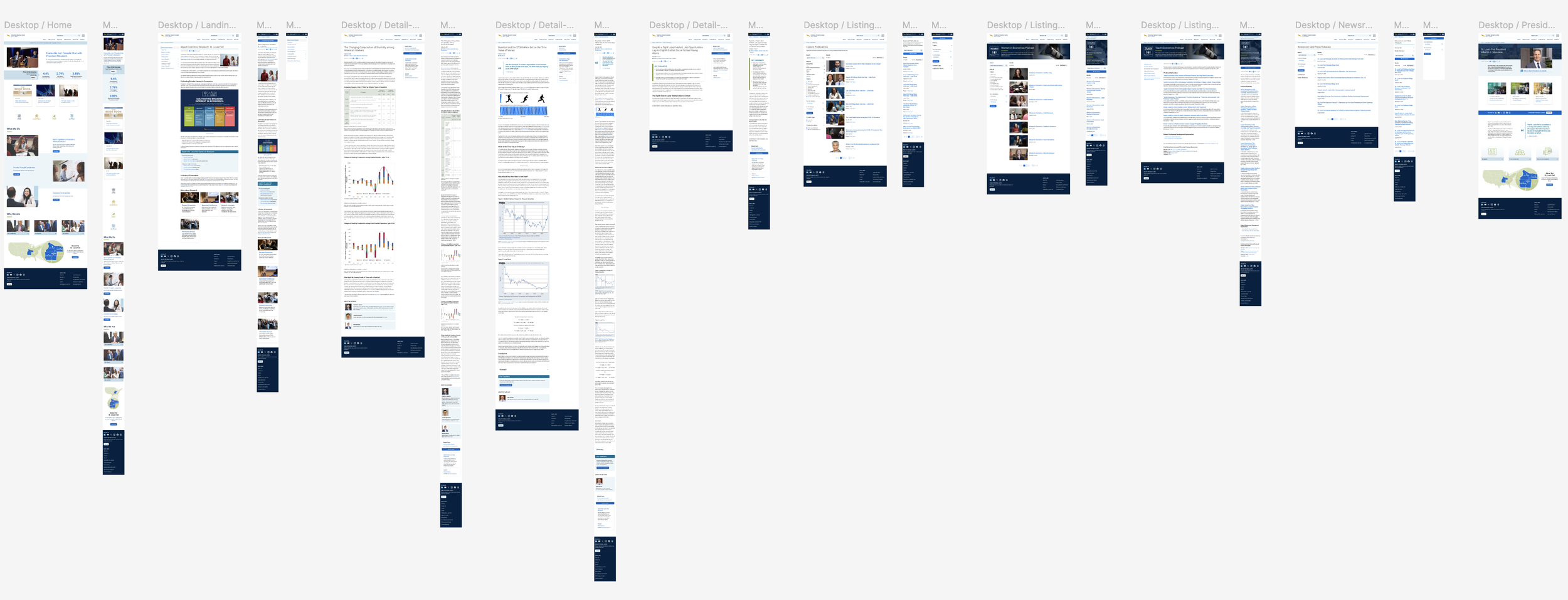
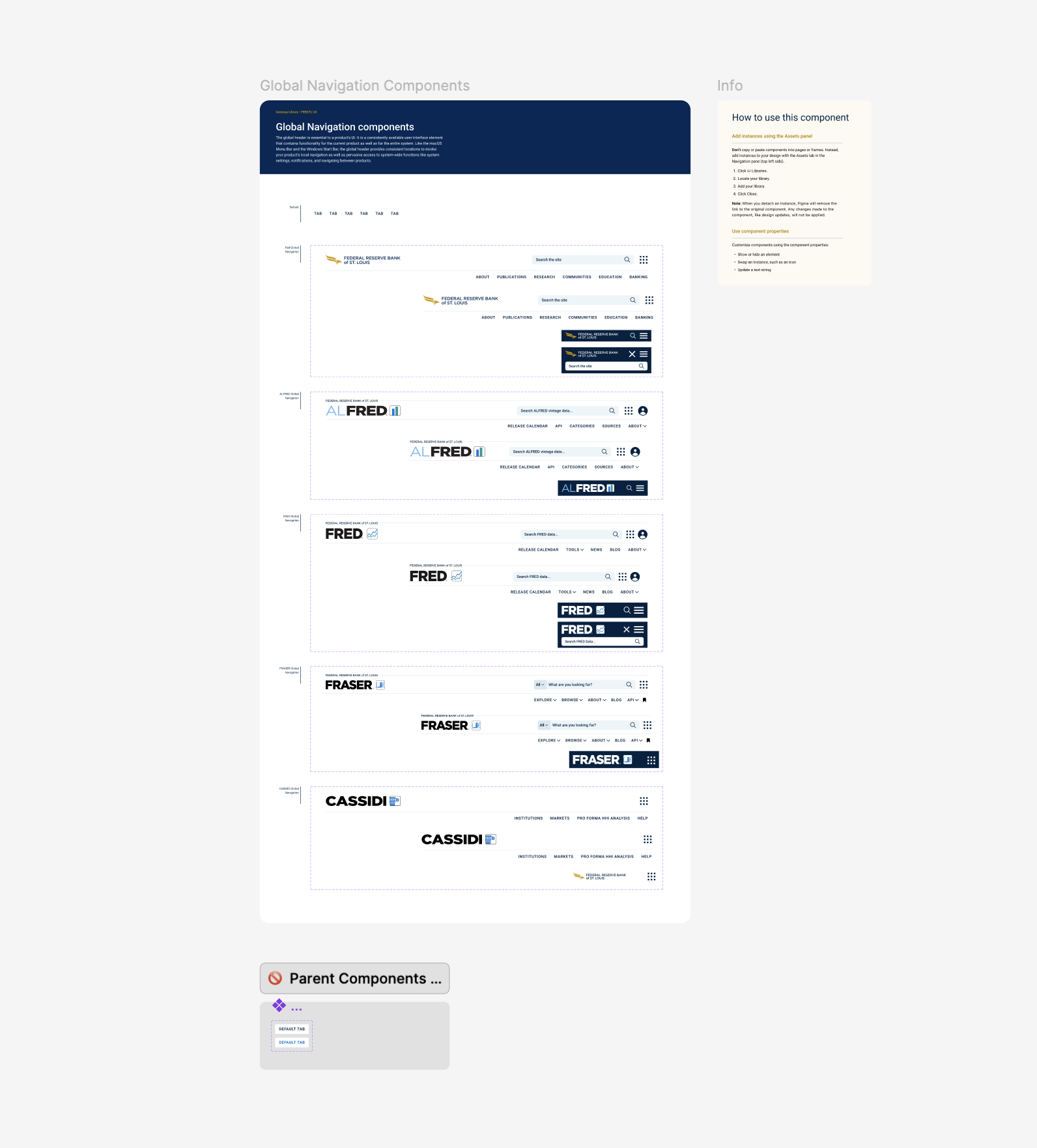
Expanding UI Patterns: Beyond working within the existing system, new patterns were established. Every edge case, state, and logic flow was documented, providing Engineering with the granular detail required for modern web and native app development.
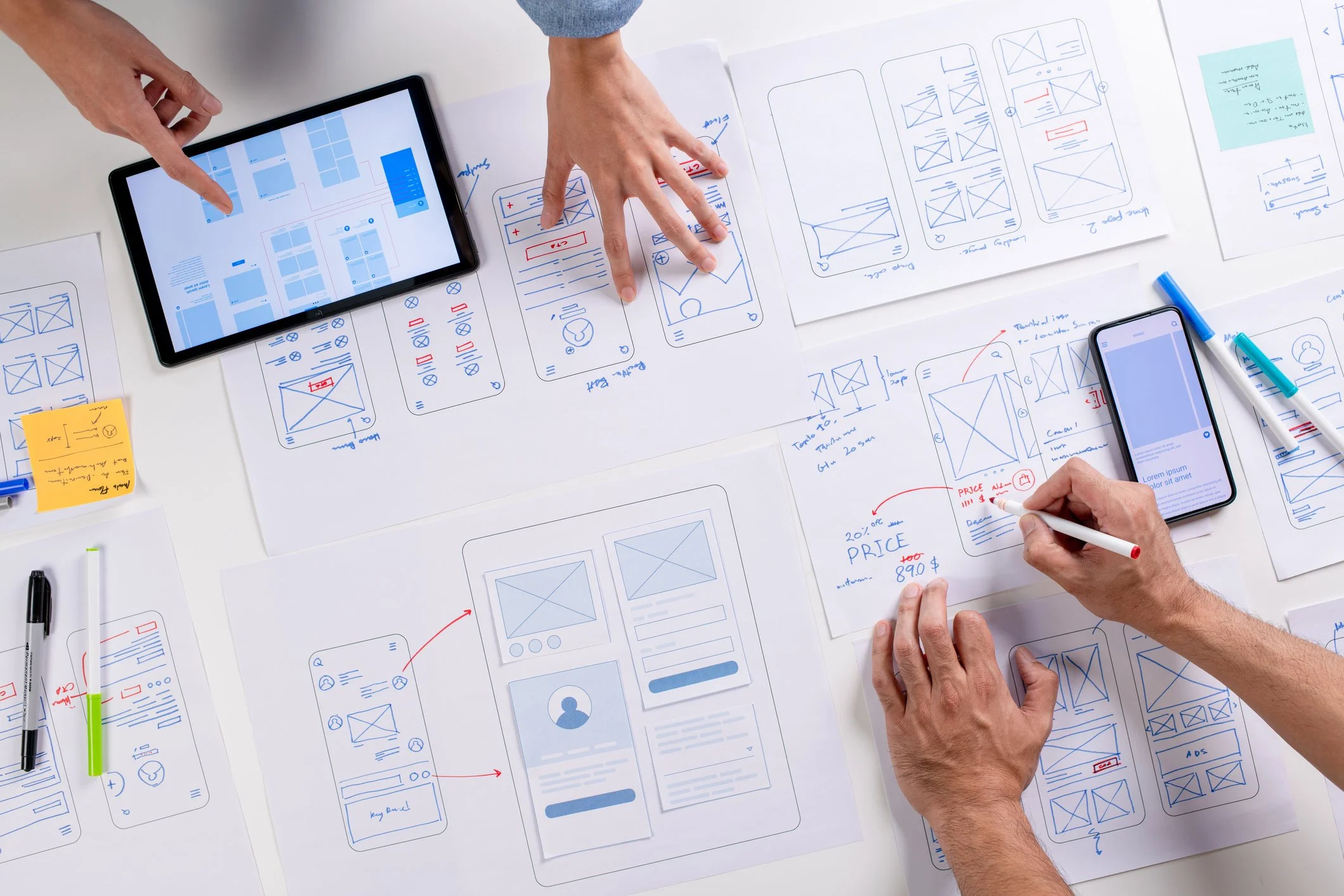
Streamlined Handoff: Reduced manual redlining and guesswork for developers through integrated documentation and Figma Dev Mode.
Empower and Upskill the Design Team
Recognizing the learning curve of moving from legacy tools, the strategy prioritized a "people-first" transition. This involved leading tailored Figma training sessions to ensure internal designers felt confident maintaining and evolving the library long-term.

The Solution: A Data-Driven, Scalable Ecosystem
The project spearheaded the end-to-end UX/UI process, working in close partnership with stakeholders to fulfill the overarching product vision.
Iterative Prototyping: Utilizing Figma’s advanced capabilities, the UI was pushed to a best-in-class level through multiple design versions, incorporating peer critique and addressing technical constraints.
Cross-Functional Collaboration: Custom training sessions focused on a compelling narrative to gain buy-in for the new workflow. Close collaboration with Engineering and QA ensured that final software releases matched the design’s visual accuracy.
Impact: Raising the Bar on Innovation
Future-Proofed Team: Completed the transition and training within 4 months, leaving the internal team equipped to manage the system independently.